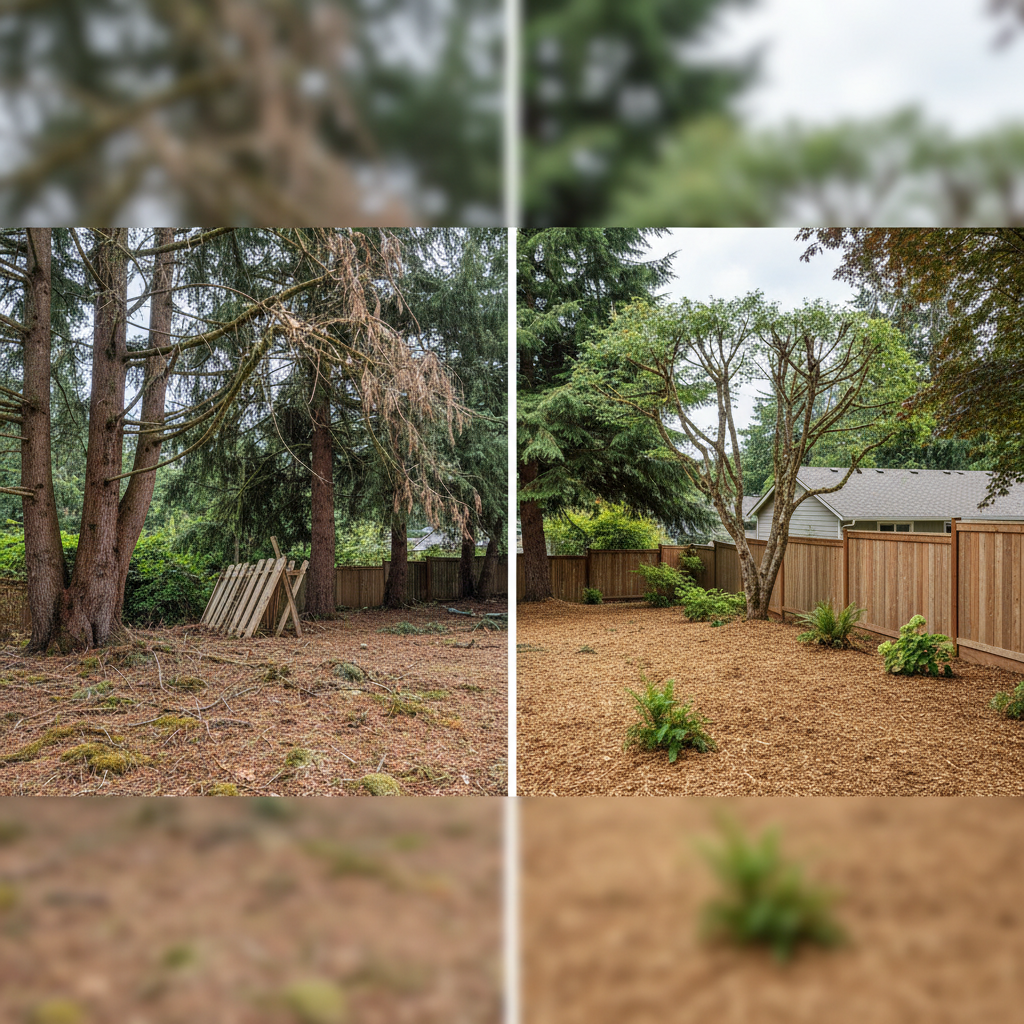
Alright, let's talk about your trees. I see a lot of folks around Tacoma, especially in older neighborhoods like the North End, dealing with tree issues. And usually, it boils down to two ways of thinking about tree health: you either get ahead of it, or you deal with it once it's a problem. So, which one's better? Let's break it down.
Proactive Tree Care: The Long Game
This is when you're actively working to keep your trees healthy *before* they show signs of trouble. Think of it like taking your car in for regular oil changes instead of waiting for the engine to seize up. For trees, this usually means getting an arborist out for regular check-ups, maybe every year or two, especially for your mature trees. They'll look for early signs of disease, pest infestations, structural weaknesses, or nutrient deficiencies.
What does proactive care involve?
- Regular Inspections: An arborist can spot things you'd never notice. Things like subtle changes in leaf color, tiny insect eggs, or fungal growth starting in a hidden spot. They're trained to read the signs your tree is giving.
- Preventative Treatments: This could be anything from deep root fertilization to improve soil health, to applying systemic insecticides to ward off specific pests common in our area – like certain aphid species or borers. Sometimes it's just proper pruning to maintain good structure and air circulation, which helps prevent disease.
- Soil Management: Our clay-heavy soils in parts of Tacoma can be tough on roots, right? Proactive care often includes soil amendments or aeration to make sure your trees get the water and nutrients they need.
Cost: Upfront, you're paying for those inspections and treatments. It's an ongoing expense, sure, but usually smaller, predictable payments. Think hundreds of dollars a year, maybe a bit more for larger properties with lots of trees, rather than thousands all at once.
Durability: This is where proactive care really shines. Healthy trees are resilient trees. They're much better at fighting off disease, surviving storms, and generally living longer, healthier lives. You're building a strong foundation.
Maintenance: It's consistent. You're scheduling appointments, but they're usually not emergencies. It's about staying on top of things, which for most homeowners, is a lot less stressful than a crisis.
Appearance: Healthy trees look good. They've got full canopies, vibrant leaves, and good structure. They add curb appeal and value to your property.
Reactive Tree Care: Playing Catch-Up
This is the approach most people take, honestly. You notice something's wrong – a branch breaks, leaves are turning yellow, there's a big crack in the trunk, or the tree just looks sick. *Then* you call someone like us at Tacoma Tree Service to come fix it.
What does reactive care involve?
- Emergency Pruning or Removal: A storm hits, and a limb is dangling dangerously over your house. Or a tree dies, and now it's a hazard. This is often urgent work, no two ways about it.
- Disease or Pest Treatment: Once a disease or pest infestation has taken hold, treatments are often more aggressive, more expensive, and sometimes less effective than preventative measures. You're trying to stop a problem that's already well underway.
- Addressing Structural Failures: Maybe a tree has grown with a weak crotch, and now it's splitting. You might need cabling or bracing, or a significant reduction in the canopy to prevent a total failure.
Cost: This is usually where reactive care hits you hard. Emergency services cost more. Removing a large, dead, or dangerous tree can easily run into the thousands. Treating an advanced disease might require multiple, costly applications, and there's no guarantee the tree will recover. It's often a big, unexpected bill.
Durability: You're trying to save a tree that's already compromised. While we can often help, the tree might never fully regain its strength or health. Sometimes, the damage is just too far gone, and removal is the only safe option.
Maintenance: It's unpredictable and often stressful. You're reacting to a problem, which means fitting in appointments, dealing with potential hazards, and worrying about your property.
Appearance: A tree that's been severely pruned to remove dead or diseased sections, or one that's struggling with an infestation, isn't going to look its best. It might have an uneven canopy or sparse foliage.
My Takeaway for Tacoma Homeowners
Look, I get it. Nobody wants another bill. But from what I've seen over the years, especially with our wet winters and sometimes dry summers here in Western Washington, going proactive almost always pays off in the long run. You avoid those sudden, huge expenses, keep your property safer, and your trees stay healthier and look better for longer.
Think about it. A preventative inspection and some deep root feeding might cost you a few hundred bucks. But letting a disease take hold, or a weak limb grow unchecked until it damages your roof? That's easily thousands. And that's not even counting the sentimental value of a tree you might lose.
So, my recommendation? Get an arborist out there to look at your trees, especially your mature ones. Get on a schedule. It's an investment, not an expense, and it'll save you a lot of headaches (and money) down the road.